Community Gathering with Hmong Herb Growers and Supporters
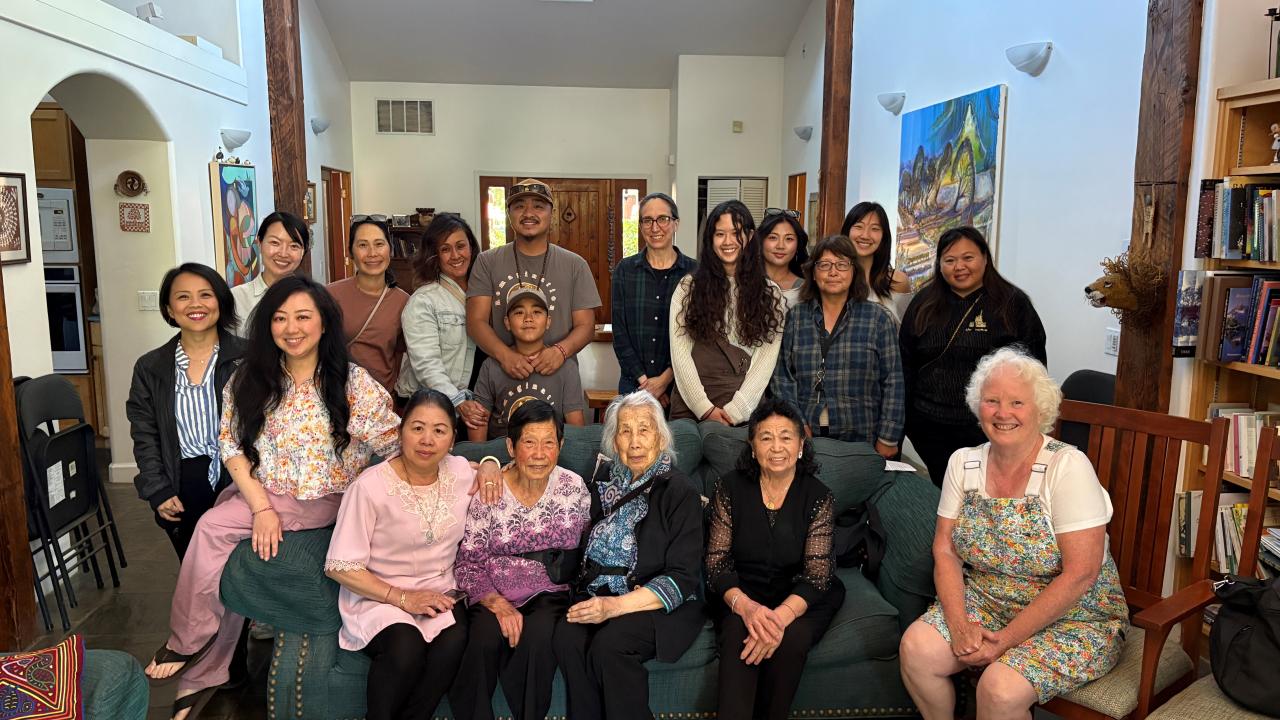
On May 13, we organized a gathering including Mao Lee with Hmong herb growers, supporters, researchers, and students held at Judy Tretheway's home, Confluence Gardens, in Sacramento. Participants included farmer and UC cooperative extension worker Ge Moua of Moua Farm, Julie from Hmong-owned specialty grocery store in North Sacramento, T & Y Market, Dr. Robyn Rodriguez and Josh Vang and their son on from Remagination Farm, and Pheej Lor, who is a researcher working on the Hmong Agrarian Diasporas project at UC Berkeley.

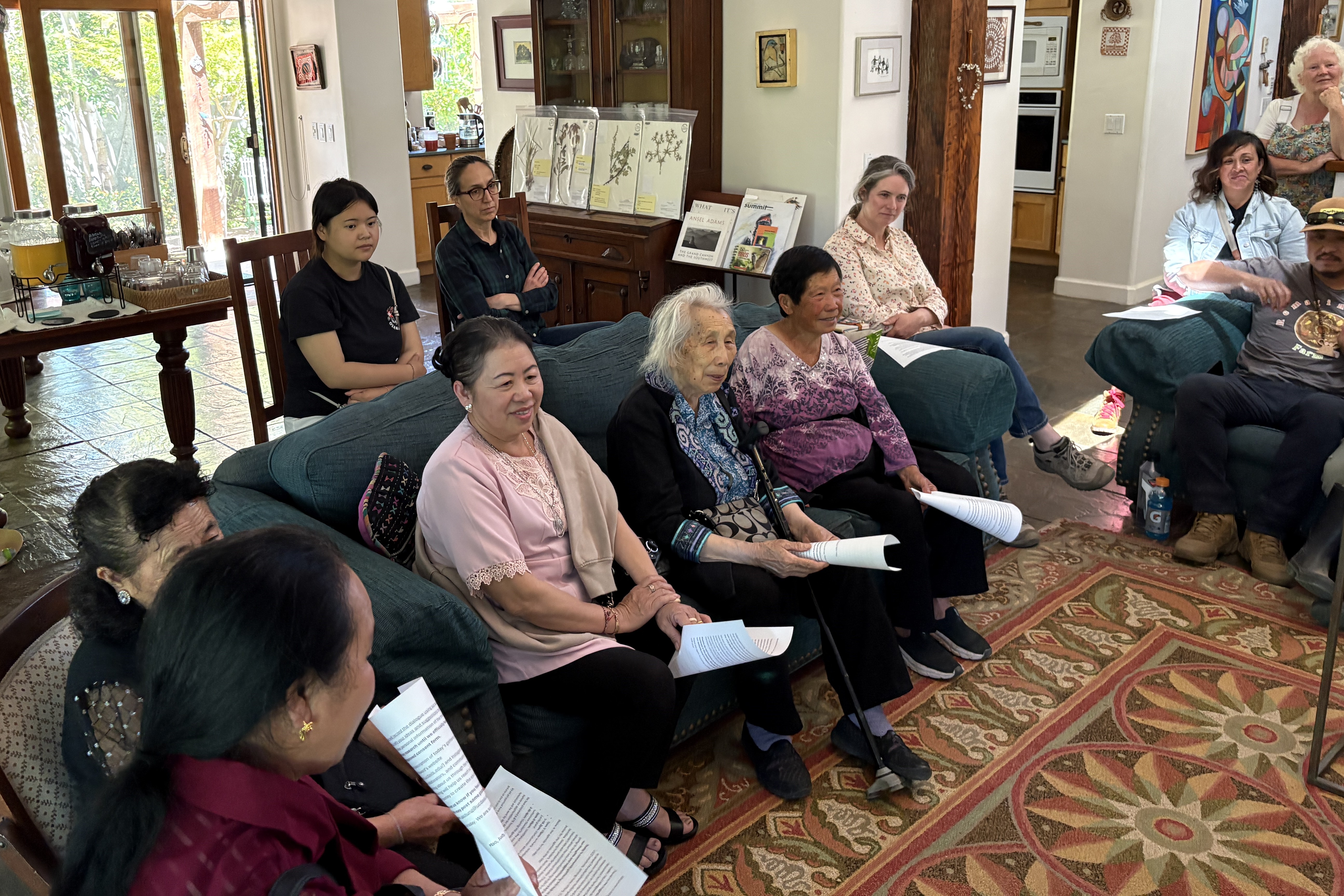
During this gathering, the team introduced the project to develop an educational toolkit for Hmong herbs, opened up the circle for participants to introduce themselves; which then lead into sharing community needs and brainstorming suggestions and thoughts for the toolkit.
After this round of brief introductions and brainstorming, the team and participants enjoyed a lunch break where different generations and people were able to connect with one another. Scenes of the calm garden and the laughter resonating throughout were highlights, and participants enjoyed getting to know one another while being engaged in a common goal.
A major topic discussed throughout this gathering was how best to preserve Hmong herbal knowledge.
The ideas in the garden circulated around creating the educational toolkit, and concerns of public accessibility and equity between the roles of growers and researchers. In the primary discussion, we focused on the most impactful forms of learning for the next generation, complimenting learning resources to the toolkit, and next steps over distribution to community and those interested. Within these areas of concern, the possible directions for the toolkit were discussed.

1. The toolkit should ultimately be visual, engaging, and as a living document.
Within the group, it was discussed that in the great diversity within the Hmong community surrounding herbal knowledge, it becomes difficult to reflect this diversity. The toolkit could have the potential be a living document that people and community could add to over time. Another note that participants made was that it is important for the toolkit to be engaging and visual, as the primary modes of learning for the Hmong herbal practitioners in the room were experiential.
2. Alongside a toolkit, a physical space where the next generation can learn through the senses, is important.
With the acknowledgement of how Hmong herbal knowledge holders and practitioners have passed on this knowledge as experiential or oral, the group came into discussion over the most impactful ways of learning. Participants noted that when healing family members or community, it is largely through the senses. It then becomes important for there to be this ability to engage in experiential learning- which as a further note came into fruition in April 2026, at the UC Davis Student Farm Ecological Garden’s new Hmong Medicinal Herb bed in collaboration with Mao and Chee.
Plant vouchers were passed around the room for participants to look at, with each participant bringing something new, and their own experiences into the conversation.
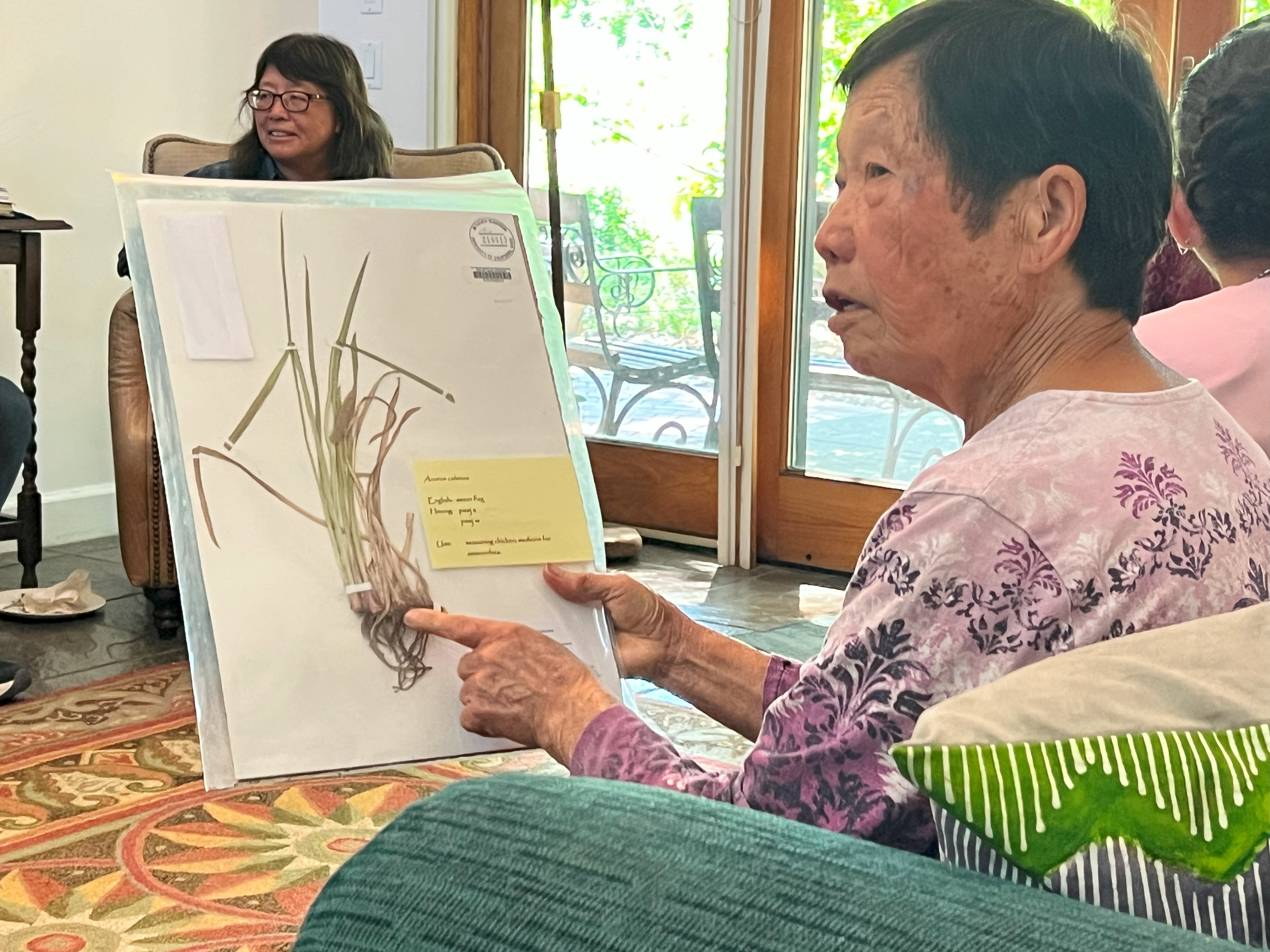
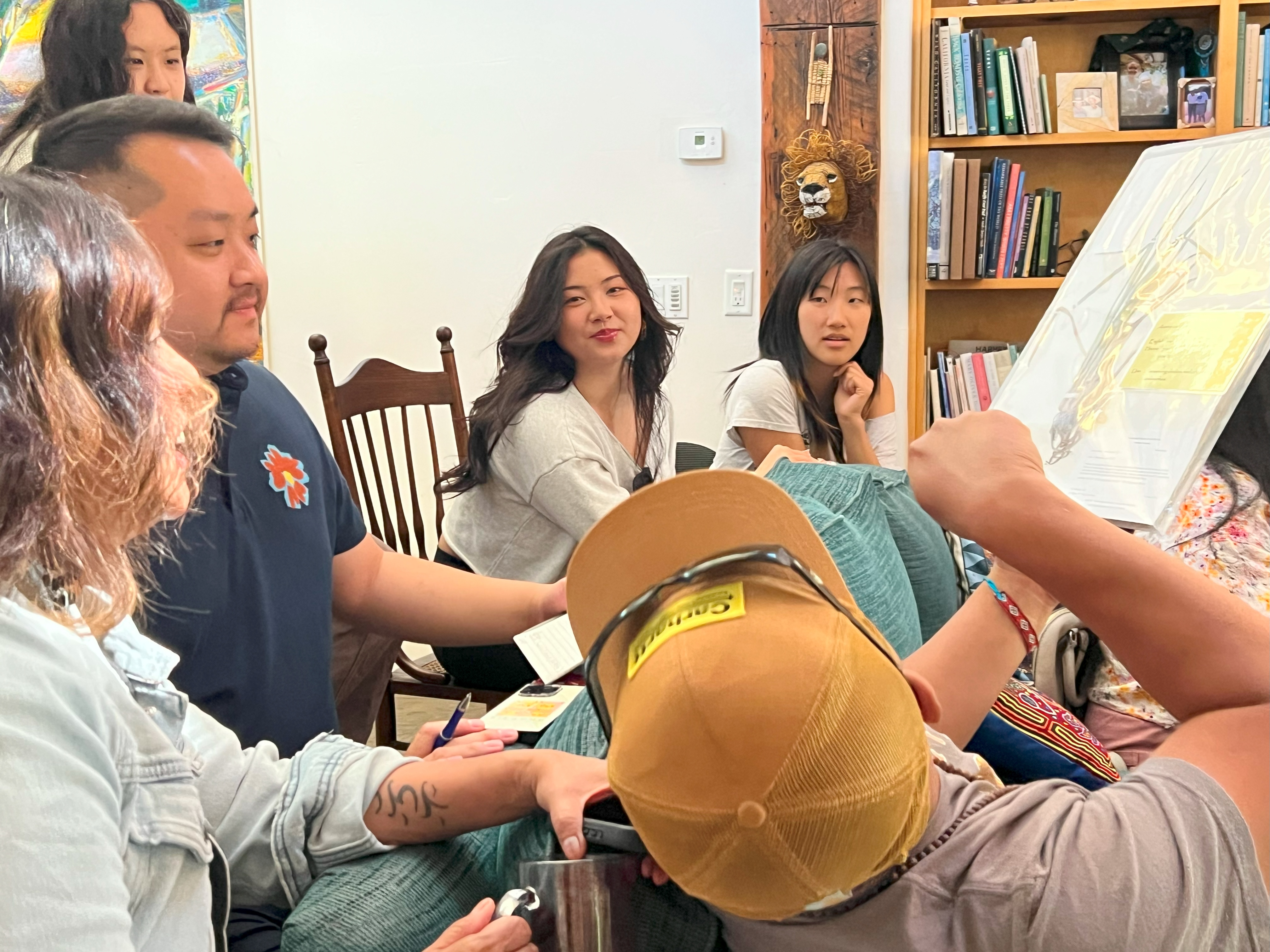
There was an additional note within this discussion that was powerful: while Mao expressed that there is a “love and open heartedness" when healing, a participated additionally noted that as the plants can be used differently from village-to-village, what the herbalist is able to extend is love- for which the plant becomes the mediator. The room resonated that honoring this presence, alongside scientific delineation, was important for the toolkit.
3. The over-looming question was: how should this be distributed?
A primary idea was an online site for easy distribution, but the conflict arises in the maintenance long-term, and that the loss of this compiling of information becomes risky in the case of online shutdowns. Public accessibility and language additionally were discussed, and ideas such as subtitles for audiovisual materials and distribution of the toolkit across community networks arose among those concerns.
Finally, Mao expressed her thoughts, translated by Chee, on how important this learning is for the next generation. Notably, to the student participants in the room.
She appreciates the young generation here today want to learn and even her children might not pick up what she left off [these] young people would be able to help the community and her children... She is happy that all the young people who are here to listen to learn she's happy for it. - Chee Weber
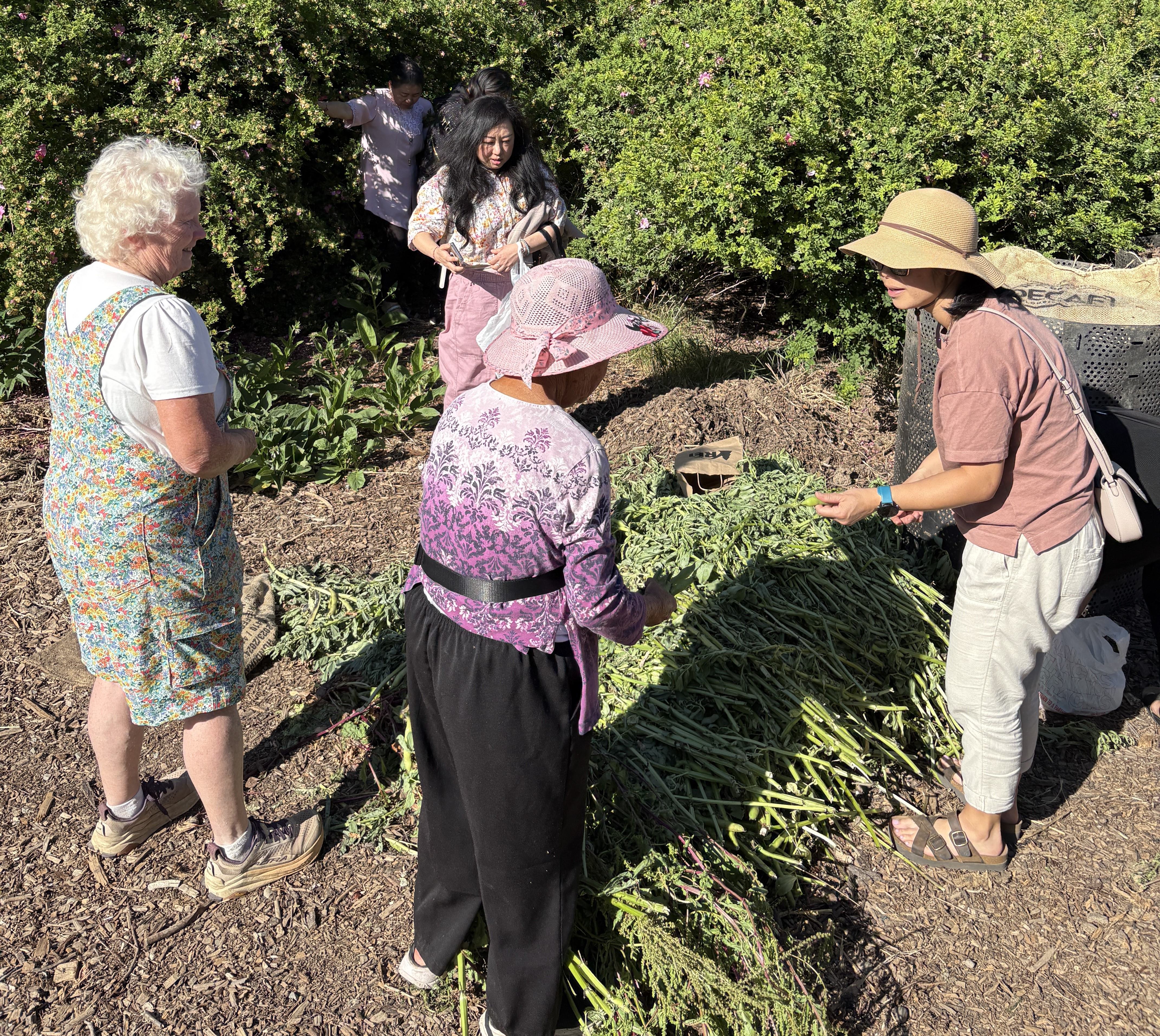
We ended this gathering with an extensive tour of Judy’s garden, during which everyone walked around and enjoyed the space that Judy, Mao, and others have fostered over time.
Participants generously shared their time and knowledge and developed intergenerational connections amongst each other, and will be in touch for next steps!
Media Resources